


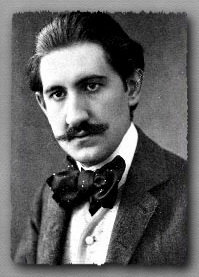
 Manolis Kalomiris – Founder of the Greek National School of Music
Manolis Kalomiris (Smyrna, December 14, 1883 – Athens, June 3, 1962) was the founder of the Greek National School of Music and one of the most important cultural figures of the 20th century in Greece. Born into a middle-class family in Smyrna, he received his first piano lessons in Athens and Constantinople, before completing advanced studies in piano, harmony, counterpoint, and composition at the Conservatory of the Society of the Friends of Music in Vienna (1901–1906).
From 1906 to 1910, he worked in Kharkov, Russia, where he came into contact with the Russian National School of Music (“The Mighty Five”). In 1908, his works were performed for the first time in Greece at the Athens Conservatory, marking the beginning of his vision for an authentic Greek musical identity.
His Compositional Work
Kalomiris developed a personal style that combined Wagnerian influences, European national schools, and Greek culture. He drew inspiration from folk songs, Byzantine chant, Greek legends, and modern Greek poetry. His output includes 5 operas, 3 symphonies, works for voice & orchestra, concertos for solo instruments & orchestra, song cycles, chamber music, piano works, choral compositions, and music education works.
His Role in Greek Music Education
Beyond his compositions, Kalomiris played a decisive role in shaping music education in Greece. He taught at the Athens Conservatory and served as General Inspector of Military Music. In 1919, he reorganized the former Lottner Conservatory into the Hellenic Conservatory, and in 1926, he founded the National Conservatory, which he directed until 1948. His contribution was honored with the National Prize for Letters & Arts of the Academy of Athens (1919).
He was president of the Greek Composers Union, served as General Director of the Greek National Opera (1944), and was elected a member of the Academy of Athens (1945).
Legacy
Manolis Kalomiris left behind a rich body of work that defined the identity of modern Greek art music. As the founder of the National Conservatory and the driving force behind the National School of Music, he shaped generations of composers, educators, and students. His contribution to Greek musical tradition and education remains alive and influential to this day.